

By Oweyegha-Afunaduula
A dictionary definition of the term democracy is that “… A system of government by the whole population or all the eligible members of a state , typically through elected representatives”.
Another dictionary definition
is “… A State governed under a system of democracy”.
The question I should now ask is: Is Uganda a democracy?
According to Wikipedia the Uganda system of democracy is based on a democratic parliamentary system with equal rights for all citizens over 18 years.. .” Really?
The Economist Intelligence Unit rated Uganda a hybrid regime in 2022. A hybrid regime is a type or political system often created as a result of an incomplete democratic transition from an authoritarian regime to a democratic one or vice versa.
Experience with hybrid regimes is that they can remain fairly stable for a long time, but it is unstable stability because eventually they break into chaos. The stability is explained by the fact that the regimes arm themselves to teeth point the guns onto the people and use a combination of threats, fear denials and the lie of indispensability to keep an otherwise increasingly restive youthful population under check.
All hybrid regimes are categorized as having a combination of autocratic features with democratic ones and can simultaneously hold political repressions and regular elections. Wikipedia record that some scholars contend that hybrid regimes may relapse into dictatorships. Indeed the more they exist the more they become dictatorial. It almost goes without saying that most hybrid regimes are in Africa.
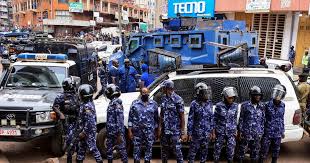
Uganda has since 1996 held regular elections every five years, but simultaneously, leadership and governance has become more and more autocratic, with civility of elections serving as an icing. Even if elections are held, increasingly the military has become more central to leadership and governance.
Initially, when President Tibuhaburwa Museveni took power through the barrel of the gun in 1986, he bulkanized civic support by filling most cabinet posts with civilians.
Through decades of Movement (NRM/A) rule, however, both leadership and governance has become both politico-military or militi-political. Actually the boundary between the two is not there. They have equal importance in the hybrid regime of Uganda. They operate together to erode and disable civilian authority.
Clearly, the military has become superior despite the fact that it is supposed to serve the civil order and to be subordinate to it. Even if electoral politics supplies people’s representatives at Council level and in Parliament, through many militarily leaning Resident District Commissioners (RDCs), District Security Officers (DSOs) and Army Members of Parliament, the military is superimposed on civic organisation and processes.
Politicomilitarism and militipolitics have jointly dictated that “deceptive civility” is depicted y the people of power to enhance their control over civil society in every sphere of life. Elections are used to hoodwink humanity everywhere that Uganda is a fully democratic country.
Increasingly militipolitics is invading the civic space with serious repercussions,most importantly, it has a success story in reducing civic authority over the security organs and all other institutions of Government.
The military mind has control over the Parliament, the executive and the Judiciary, to ensure that the Executive, Parliamentary and Judicial processes are the ones it desires. This way the three pillars of government are not necessarily adequately independent of each other.
If we critically crutinise President Museveni’s Cabinet we find that it is Generals-heavy. There is General Tibuhaburwa Museveni himself. There are also Generals Moses Ali, Katumba Wamala, Kahinda Otafiire, Jim Muhwezi, Jeje Odongo, David Muhoozi, et cetera. Even the Vice President of Uganda, Jessica Alupo, is a retired Major of the Uganda Peoples Defense Forces UPDF. What does it mean when 5gd top positions 8n Government are held by either serving soldiers or retired soldiers?
We should not forget that the the military (and police) work by the method of Order-Obey. However, this does not mean that the Generals cannot be manipulated by shrewd technocrats. Or else the technocrats can make use of the Order-Obey method of the Generals to pursue their own interests. This could be one avenue, which explains the rising level of corruption in Government.
In Parliament militipolitical influence is best exhibited through the NRM Caucus through which retired General Tibuhaburwa gets everything he wants in terms of legislation. He is the Chairman of the National Resistance Movement (NRM). He can use the Order-Obey method to achieve his aims and purposes 8n Parliament.
For example, as the Minister of Finance he oversees the budgeting process (i.e., the making of the National Budget) and his mind is greatly reflected in the the budget lines and overall burger that gets approved. The just passed 2023/24 National Budget of U.Shs. 52.74 Trillion includes large sums money for his son-in Law (Odrek Rwabogo), for his clothing, for State House and , definitely for the security organs. This has for years been the case. Only new thing is the public money sliced out for his business magnet son-in-law. This means that Uganda’s National Budget is Musevenicentric. Everything else is secondary. Indeed, the President’ view of development is that (infrastructure) development comes first, nature and environment next and people last. He comes first then people come next. This could explain why instead of stressing education and health, which matter to Ugandans, capacity building is emphasised more in the National Budget.
Therefore, when the military penetrates civic territory of leadership and governance, where the negotiated approach is the preferred method, then the Order-Obey approach becomes more commonly applied. It can pollute what are civic processes. It is enough for the President, who is a retired General, has practiced Order-Obey approach for most of his working life, and believes he is servant of no one, to pursue his military and political goals over and above national ones.
Frequently in Uganda when the individual interests of the President clash with institutional interests or national goals, the President wins. That is what the joint manifestation of politicomilitarism and militipolitics has dawned on Uganda over more than three and a half decades of Movement rule.
Unfortunately, simultaneously hereditary politics and Apartheid-like leadership and governance have taken root, further diminishing meaningful and effective citizens participation in determining the destiny of their country and their own destiny. The Order-Obey approach to governance has meant that policies, laws, programmes, projects and strategies are conceived for the the people and applied as if they are non-thinking beings.
There is need to rethink leadership and go governance in Uganda to make these essentials of human society more democratic and participatory and less Musevenicentric or entirely non-Musevenicentric.
Otherwise Uganda and her people are in a very precarious situation. Beyond President Museveni a lot of uncertainty reigns. There is no doubt that President Tibuhaburwa Museveni desires his family rule for Uganda,, which is certainly a personal dominion. The urge for family rule will definitely clash with the people’s desire to rebuild their independence and sovereignty over their their country. However, demilitarizing governance and leadership will remain a challenge well in the future. Politicomilitarism and militipolitics has done a lot of damage to Ugandà, which transcends generations. Rebuilding the ecology, environment, ethics, morality, cultures intellectual fibre, freedom and justice in the country will be as difficult as going to heaven.
For God and My Country.
The Writer Is a Ugandan Scientist And Environmentalist
DISLCAIMER: The views expressed in this article are solely for and belong to the author/ writer. They don’t reflect, portray or represent those of Accord Communications Limited, It’s affiliates, Owners or employees. If you have a story in your community or an opinion article, let’s publish it. Send us an email via ultimatenews19@gmail.com or WhatsApp +255 769138299