

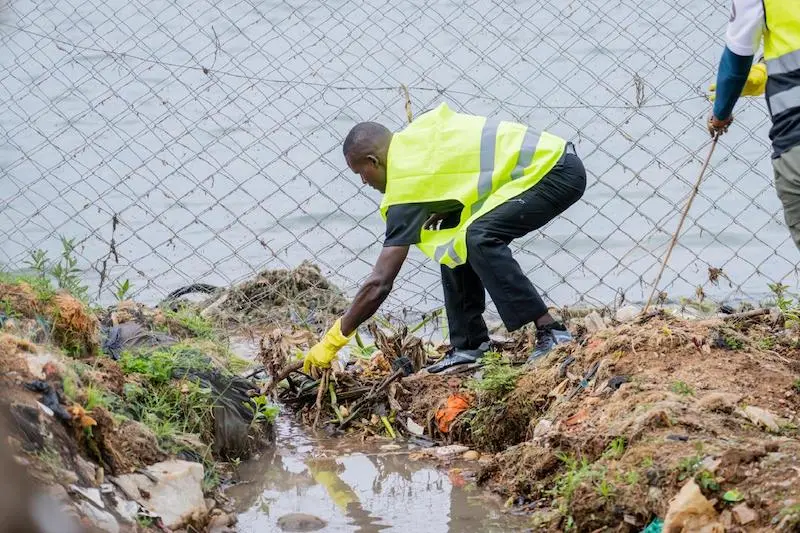
Ugandans will be required to spend three hours cleaning their communities every last Saturday of the month under a nationwide sanitation programme announced by the government.
From 7:00am until 10:00am, normal non-essential movement will be restricted, businesses will close and communities will carry out organised cleaning of public spaces. Emergency services and security vehicles will continue operating.
Prime Minister Robinah Nabbanja said the programme is intended to make community participation a central part of efforts to tackle poor sanitation and prevent disease.
“The National Cleaning Day initiative will run from 7:00 am to 10:00 am on the last Saturday of every month. During this period, all Ugandans are expected to participate in organised cleaning activities within their communities, including roads, health facilities, drainage systems, markets, places of worship, schools and other public places,” Nabbanja said.
She announced the initiative at the Office of the Prime Minister in Kampala alongside representatives from the ministries of Health and Local Government, KCCA, police and NEMA.
Cabinet approved the creation of a National Cleaning Day on August 11, 2025, during a meeting chaired by President Yoweri Museveni.
Government figures presented by Nabbanja suggest sanitation remains a significant public health problem.
She said roughly three-quarters of diseases reported in Uganda are associated with poor sanitation and hygiene, with illnesses including diarrhoea, typhoid and malaria among those highlighted.
Waste collection is another concern.
Kampala alone generates an estimated 2,000 to 2,500 tonnes of solid waste every day, according to Nabbanja, but only about 50% to 60% is collected and properly disposed of.
Waste that remains uncollected can find its way into drainage systems and public spaces, contributing to blocked channels, pollution and conditions favourable to disease outbreaks.
Nabbanja also cited Ministry of Health data indicating that about 33 children die every day from diseases linked to poor sanitation and hygiene.
She said the government’s intervention was consistent with Article 39 of the Constitution, which guarantees the right to a clean and healthy environment.
Local governments will take responsibility for mobilising residents and determining which locations require priority attention.
The programme is due to be officially launched on Saturday, July 25, in Kisenyi, Mengo, at an event expected to be led by Vice President Jessica Alupo. Detailed guidelines on how the monthly exercise will operate are expected afterwards.
Questions have also emerged about the decision to conduct the exercise on Saturdays because Seventh-day Adventists observe the day as their Sabbath.
Health Minister Dr Chris Baryomunsi said the government had taken religious considerations into account by scheduling the clean-up early in the morning.
“We have deliberately set these early hours of the day to enable people to carry out their other activities later. Secondly, we are not meant to offend any of the beliefs of Ugandans. But I also want to ask, do SDA members also fall sick on Saturday? Let me quote the words of Jesus in the Bible. He said you can rescue your cow or sheep immediately when it falls into a pit. So let us all participate as much as possible,” Baryomunsi said.
Deputy Inspector General of Police James Ochaya said officers would enforce the directive and that police had experience implementing restrictions from the Covid-19 period.
President Museveni has directed police and other security agencies to ensure the public complies with the programme, according to Nabbanja.
The government has adopted “A Clean Uganda is Everybody’s Business” as the theme for the initiative.