

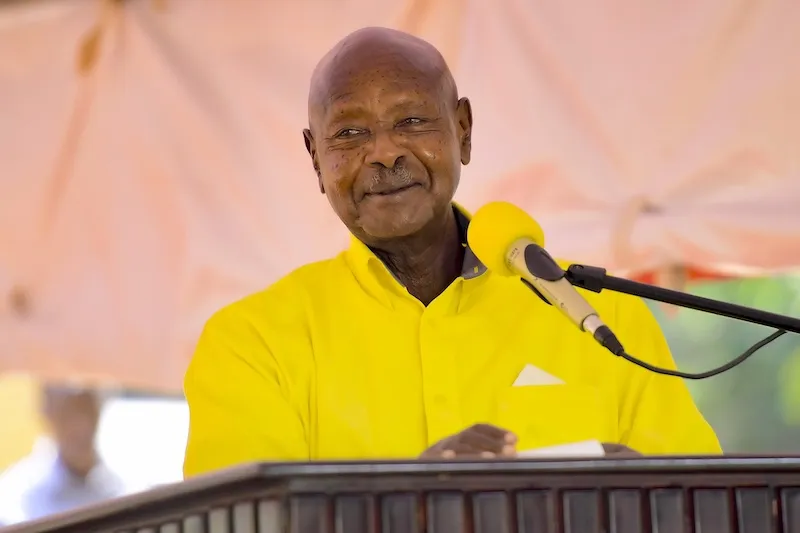
On a warm Sunday afternoon in Nakalanga Village, Kaliro District, President Yoweri Museveni took part in a symbolic tree-planting ceremony, reinforcing both his cultural ties to the Busoga sub-region and his political message of unity, development, and poverty eradication. His appearance at the annual St. Gonzaga memorial event served as a platform to pledge government support for the revitalization of religious tourism sites across Busoga.
Addressing thousands of pilgrims and residents, Museveni emphasized that the preservation and modernization of Uganda’s sacred heritage sites—such as those honoring St. Gonzaga, St. Matia Mulumba, and Bishop Hanington—would not only honor historical sacrifice but also contribute to national growth. He committed to including the renovation of these sites in the 2026/2027 national budget, aspiring to transform them into spiritual and economic hubs akin to Namugongo.
The event, which began with a Catholic mass led by Archbishop Emmanuel Obbo of the Tororo Archdiocese, focused on peace, unity, and the spiritual legacy of Uganda’s martyrs. Local leaders, including MP Sanon Bwiire and Deputy Prime Minister Rebecca Kadaga, urged for improved infrastructure—roads, electricity, and water—to support tourism and boost local incomes. Kadaga also criticized the Ministry of Tourism for sidelining Busoga’s religious landmarks from national promotion efforts.
Religious leaders joined in the call for greater partnership with the state in economic development, arguing that spiritual missions are hindered when congregants live in poverty. In response, Museveni pledged UGX 300 million to support a diocesan savings cooperative, stating that empowering the Church economically was vital to uplifting communities.
The ceremony concluded with dramatic symbolism as youths gifted Museveni a warrior’s spear and shield—gestures that affirmed his readiness for continued political battles as the 2026 elections approach. While Museveni’s message merged faith and governance in a bid to strengthen national unity and uplift marginalized regions, questions remain about whether these promises will translate into tangible results or fade like many political pledges before them.